

Dubailand is not a single community; it’s a district. One of the largest in Dubai, covering more than 278 square kilometres and home to hundreds of sub-communities, projects, and master-planned neighbourhoods that together form one of the emirate’s most diverse and fast-evolving residential zones. That scale is both its appeal and, if you approach it without a filter, its complication. Buy in the right sub-community, and you get significant space, an improving lifestyle, and a realistic entry point into Dubai property at a fraction of the price of more central districts. Buy without that filter, and you’re in an early-stage development with thin amenities and a long wait for infrastructure.
This guide cuts through the scale and gives you a clear picture of what Dubailand is, who it suits, what property costs, and how the investment case stacks up in 2026, with specific focus on the Weybridge Gardens corridor.
What and Where Is Dubailand?
Dubailand is a mega-development zone on the southeastern edge of Dubai, bordered by Emirates Road (E611) to the south and Sheikh Mohammed Bin Zayed Road (E311) to the north. Its geographic range spans everything from the established Arabian Ranches and DAMAC Hills communities in the west to newer, actively developing zones in the east, including Liwan, Arjan, and the Dubailand Residential Complex corridor.
Key road connections:
- E311 (Sheikh Mohammed Bin Zayed Road): the northern arterial running through and past the zone, connecting to Dubai Sports City and the wider city
- E611 (Emirates Road): the southern boundary, connecting to Abu Dhabi, Dubai South, and Al Ain
- Sheikh Zayed Bin Hamdan Al Nahyan Street: the primary internal north-south spine of the district
In practical driving terms, central Dubailand communities are approximately:
- Downtown Dubai / Burj Khalifa: 25–30 minutes
- Dubai Mall: 25–30 minutes
- Dubai International Airport: 25–30 minutes
- Dubai Marina: 30–35 minutes
- Al Maktoum International Airport: 25–30 minutes
The upcoming Dubai Metro expansion with new lines confirmed to extend connectivity into Dubailand corridors is projected to materially reduce travel times and, according to property analysts, has already begun to support price appreciation in well-positioned sub-communities ahead of delivery.

Who Dubailand Suits
Dubailand’s sheer diversity means it genuinely suits several distinct buyer profiles but the common thread is space and relative value.
Families seeking larger homes. Dubailand is one of the few places in Dubai where AED 1.5–2.5 million gets you a 3–4 bedroom townhouse with a private garden, pool access, and proximity to decent schools. Arabian Ranches 3, Villanova, Mudon, and DAMAC Hills 2 have all established strong family communities with the critical mass of schools, parks, and retail that families require for daily life.
First-time buyers and apartment investors. In sub-communities like Arjan, Liwan, and the Dubailand Residential Complex, apartment pricing remains among the most accessible in Dubai without sacrificing quality. Gross yields in these apartment segments run 6–8.5% depending on the specific community, according to market analysis from Dubai Property Insight.
British design-conscious buyers. One of Dubailand’s most interesting recent additions is the Weybridge Gardens series from LEOS Developments, a British-designed, petal-inspired residential community that brings architectural distinction and premium specification to a district that has traditionally been associated with mainstream product. For buyers who want something visually and architecturally different in the Dubailand corridor, Weybridge Gardens stands apart.
Long-horizon investors. For investors with a 5–10 year view, Dubailand’s development trajectory, maturing infrastructure, metro connectivity arriving, and consistently improving amenity provision create a reasonable capital appreciation case on top of solid rental returns.
Lifestyle and Amenities
The honest assessment of Dubailand lifestyle is that it varies enormously by sub-community. The established western communities (Arabian Ranches, DAMAC Hills) have mature retail, dining, parks, and school infrastructure. Newer eastern communities are still building that out. The key questions to ask about any specific Dubailand community are: how mature is the surrounding retail, which school is within a practical distance, and what amenities are within the development itself?
For the Weybridge Gardens communities specifically, LEOS has built the lifestyle infrastructure into the development itself:
Within Weybridge Gardens 3, 4 & 5:
- Infinity rooftop pool and sky beach
- Tuscany-inspired cascading jacuzzis
- LEOS Boxing Academy and LEOS Dance Studio
- Fully equipped gym with changing rooms and saunas
- Zen garden yoga deck
Outdoor cinema, BBQ area and al-fresco dining - Co-working space and lounge area
- In WG4: Baja shelf with in-water sunbeds, sunken pool loungers, and padel court
This approach, building the lifestyle into the development rather than relying on surrounding infrastructure, matters more in Dubailand than it does in central Dubai, and it’s why the Weybridge Gardens series has attracted significant investor attention.
Broader Dubailand lifestyle assets include Global Village (seasonal), IMG Worlds of Adventure, and Al Habtoor Polo Resort within the wider zone.
Property Types and Prices in 2026
Dubailand covers the full spectrum from studios to 6-bedroom signature villas, and prices vary accordingly across its sub-communities. For the purposes of this guide, we focus on the apartment and townhouse segments that represent the majority of active investor and buyer activity.
Apartment prices (Arjan / Liwan / Dubailand Residential Complex corridor):
- Studios: AED 400,000–650,000
- 1-bedroom: AED 600,000–950,000
- 2-bedroom: AED 900,000–1,500,000
- Weybridge Gardens specific pricing (LEOS Developments):
*Weybridge Gardens 3 (The Alps Edition) Q3 2026 completion:*
- Studios from AED 550,000 (464–517 sq ft)
- 1-bedroom from AED 1,100,000
- 3-bedroom with private jacuzzi from AED 1,446,830
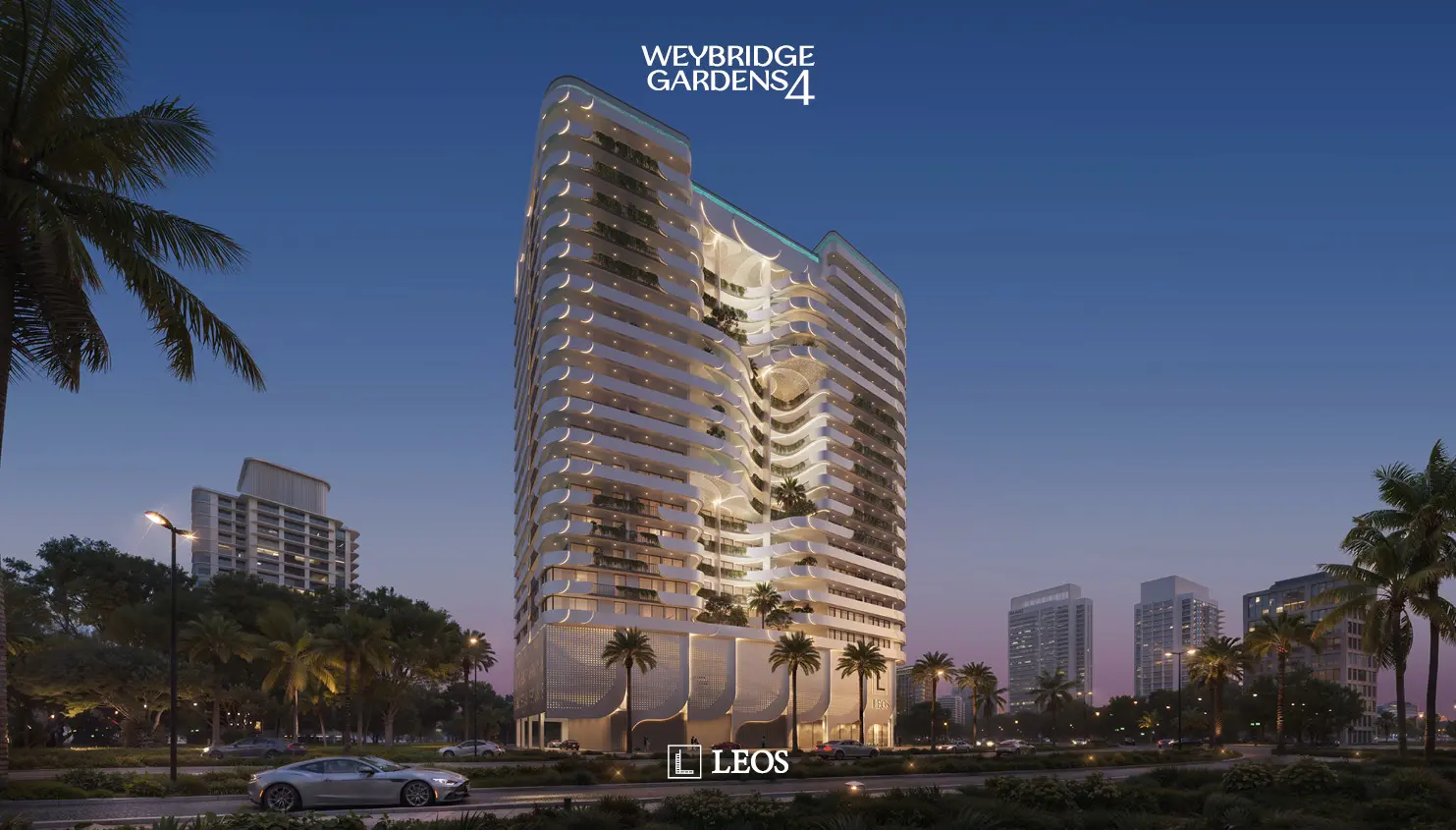
Weybridge Gardens 4 (Kensington Edition) Q2 2027:
- Studios from AED 690,818 (516–620 sq ft, private pool)
- 1-bedroom from AED 825,958
- 2-bedroom from AED 1,597,268
- 4-bedroom Sky Villa from AED 2,249,006
Weybridge Gardens 5 (Legacy Edition) Q2 2027, designed by LUD Studios:
- Studios from AED 723,935
- 1-bedroom from AED 970,099
- 2-bedroom from AED 1,493,433
- 3-bedroom from AED 1,853,230
All Weybridge Gardens 4 and 5 units include a private pool, a meaningful specification distinction in this price band.
Rental Yields and the Investment Case in 2026
Rental yields in Dubailand’s apartment segment have historically been competitive, running 6–8.5% gross depending on sub-community and unit type, according to Dubai Property Insight’s 2026 market analysis. The Arjan sub-community specifically has recorded yields in the 7.58–8.5% range.
For villa and townhouse investors, the yield profile is lower (typically 4.5–6% gross) but the capital appreciation case is stronger particularly in the established western communities where supply is constrained and family demand is consistent.
The investment argument for Dubailand in 2026 rests on three structural factors:
1. Price relative to quality. Dubailand generally offers villa pricing 20–35% below equivalent properties in Dubai Hills Estate, with comparable specifications. For apartments, accessible price points at AED 500,000–700,000 provide genuine entry into Dubai freehold property.
2. Infrastructure trajectory. The Dubai Metro expansion with new route connectivity confirmed for Dubailand corridors has already begun to affect pricing in well-positioned communities, with analysts projecting continued appreciation as delivery approaches.
3. End-user demand. Families consistently choose Dubailand for the combination of space, relative affordability, and improving school/retail infrastructure. End-user demand creates more stable rental tenure, lower vacancy, and more predictable income than purely investor-driven areas.
Dubailand is a freehold zone for non-UAE nationals. Properties at AED 2 million and above qualify for the 10-year UAE Golden Visa under current rules.

Off-Plan in Dubailand: British-Design Projects and Payment Plans
The off-plan pipeline in Dubailand is significant and variable in quality. The key principle for investors is to focus on developers with track records of delivery and developments with built-in lifestyle infrastructure.
LEOS Developments’ Weybridge Gardens series covering three distinct editions across Dubailand offers the most architecturally distinctive product currently active in the corridor. The petal-inspired design language, British construction standards, and lifestyle-within-the-development approach creates meaningful differentiation from standard Dubailand product.
Payment structures for Weybridge Gardens vary by edition:
- WG3: 20% down, with balance on or post-completion
- WG4 & WG5: 50/50 during construction and on completion; with 60/40 (2 years post) and 65/35 (3 years post) options
All LEOS off-plan properties are RERA-registered with mandatory DLD escrow protection
Pros, Cons and Who Should Buy
Pros:
- Space and value compared to central Dubai: more sq ft per AED spent
- Freehold and Golden Visa eligible at qualifying prices
- Strong rental yields in apartment segments (6–8.5% gross)
- Metro connectivity improving long-term capital appreciation case
- Maturing lifestyle and retail infrastructure in established sub-communities
- LEOS Developments’ Weybridge Gardens brings British design quality to the corridor
Cons:
- Car-dependent: Dubailand lacks metro connectivity today (improving but not yet delivered)
- Lifestyle maturity varies significantly between sub-communities, research the specific area, not just the district
- Supply pipeline in Dubailand is large; buy in communities with proven demand rather than early-stage launches
- Capital appreciation has historically lagged behind coastal and central Dubai, this is a fundamentals play, not a momentum trade
Who should buy: Families seeking space at mid-market prices; first-time buyers wanting a Dubai freehold address at accessible entry points; yield investors targeting 6–8%+ in apartment segments; medium-horizon investors positioning for the metro connectivity uplift.
Featured LEOS Developments in Dubailand
The Weybridge Gardens series brings British-designed, petal-inspired architecture to Dubailand across three distinct editions: WG3 The Alps (studios from AED 550,000, Q3 2026 completion), WG4 Kensington Edition (studios from AED 690,818 with private pool, Q2 2027), and WG5 Legacy Edition (studios from AED 723,935, designed by LUD Studios, Q2 2027).
Frequently Asked Questions
1. Is Dubailand a good area to invest in?
For the right buyer, yes. Families and long-term end-users benefit from space and relative affordability. Investors should focus on established sub-communities with proven demand rather than early-stage launches. Rental yields in the apartment segment are competitive at 6–8.5% gross.
2. What are rental yields like in Dubailand?
Apartment yields in sub-communities like Arjan run 6–8.5% gross. Villa and townhouse yields are lower, typically 4.5–6%, reflecting higher entry prices. Net yields are typically 1.5–2% below gross after service charges and costs.
3. How far is Dubailand from Downtown Dubai?
Most central Dubailand communities are 25–30 minutes from Downtown Dubai by road via E311 or Emirates Road in normal traffic.
4. Is Dubailand freehold for foreign buyers?
Yes. Dubailand is a designated freehold zone. Non-UAE nationals can purchase, hold full title, and resell freely.
5. What new developments are launching in Dubailand in 2026?
LEOS Developments’ Weybridge Gardens 4 (Kensington Edition) and Weybridge Gardens 5 (Legacy Edition) are both active, with Q2 2027 anticipated completion dates. WG5 is designed by LUD Studios. All units in WG4 and WG5 include private pools.
