

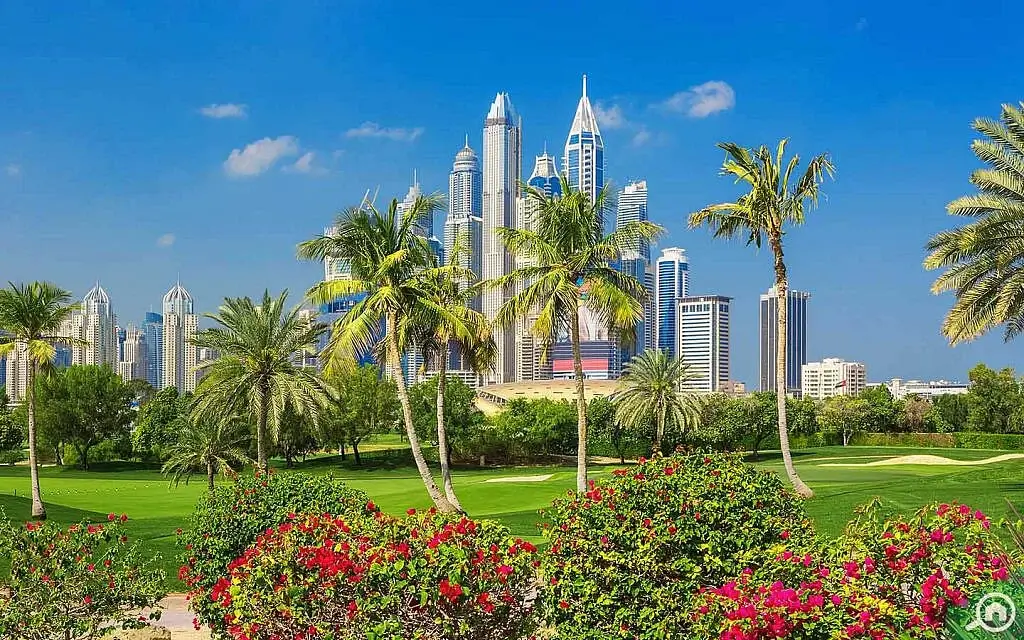
Its market dynamics and distinct climate define Dubai’s real estate landscape! So, If you’re considering making Dubai your home or eyeing it as an investment opportunity, comprehending its climatic patterns is paramount. This article will provide an in-depth look at Dubai’s climate and its correlation with the emirate’s real estate sector.
Dubai Climate Over the Year: An Overview
Dubai’s geographical positioning in the United Arab Emirates gifts it a distinct climate characterised by prolonged summers and brief, comfortable winters.
The days are long, sweltering, oppressive, arid, and partly cloudy in summer. In contrast, winter offers relief with comfortable, dry, and predominantly clear conditions. Over the year, temperatures range between 57°F and 106°F (13.8°C to 41.1°C ), rarely dropping below 52°F/ 11.1°C, or climbing above 112°F/ 44.4°C.
For enthusiasts of warm-weather activities, Dubai’s weather is most welcoming during the entirety of April and from mid-October to late November.
Dubai Average Temperature
To better understand the temperature nuances:
-
Hot Season
Lasting for 4.3 months, from May 14 to September 24, the daily average temperature hovers above 100°F/ 37.7°C. August stands out as the most scorching month, with average highs of 106°F/ 41.1°C and lows of 86°F/ 30°C.
-
Cool Season
This more temperate phase spans 3.1 months, starting from December 3 and extending to March 5. The daily average temperature remains below 81°F/ 27.2°C. January, in particular, is the mildest month, with lows of 58°F/ 14.4°C and highs around 75°F/ 23.8°C.
Dubai’s Humidity
In places like Dubai, where the temperatures can really soar, how humid it feels makes a big difference in how comfortable we are. The dew point, which indicates the rate of perspiration evaporation from the skin, is a key metric here! Unlike fluctuating temperatures, dew point changes are gradual, ensuring that humid days are often followed by humid nights.
Dubai’s humidity sees stark seasonal variations; that the muggier phase, lasting 7.3 months from April 13 to November 22, witnesses days where comfort levels range from muggy to oppressive. July is the most humid month, registering 27.0 days of high humidity. Conversely, January offers a breather with just 0.6 days of high humidity.
The Impact of Dubai Climate on the Real Estate Sector
Dubai’s unique climatic conditions powerfully shape the revolution of its real estate sector and population distribution.
Dubai’s Coastal Areas
Dubai’s coastal regions are aesthetic marvels and strategic masterstrokes in real estate development. With their slightly cooler microclimates, waterfront properties have taken centre stage. Presently, the UAE’s coastal areas accommodate most of its population, marked by many hotels, resorts, and real estate projects in prime, low-lying zones.
Infrastructure Improvement Plans
Developers and planners focus on infrastructure improvements tailored to the city’s climate as the temperature soars.
In 2022, the UAE Ranked first in the MENA region and 11th globally in UNIDO’s Quality Infrastructure for Sustainable Development Index.
In other words, the country’s infrastructure improvement plan encouraged Dubai to be the most advanced infrastructure within the GCC region; including well-integrated transport systems and an impressive assembly of iconic structures.
Architectural Ingenuity Driven by Dubai Climate
Dubai’s scorching desert climate hasn’t stifled its architectural aspirations; instead, it has driven innovation; the real estate sector has consistently demonstrated a capacity to adapt, with design principles evolving in response to environmental challenges.
Modern Techniques in Building Design for Dubai’s Climate
As we mentioned before, Dubai’s climate has encouraged architects and builders to innovate by conceptualising building designs. The following are some sophisticated techniques that they employ to ensure that the structures stand out for their aesthetics and remain functional and sustainable in the harsh desert climate.
-
Smart Building Controls
The developers design buildings with intelligent controls that auto-adjust lighting and temperature based on the prevailing outdoor conditions.
-
Automated Shading Devices
These devices automatically adjust shading according to the sun’s position, enhancing energy efficiency and reducing heat gain.
-
Advanced Insulation Materials
Minimising heat transfer and subsequently reducing the air conditioning demand, structures are now designed with superior insulation materials.
-
Building Orientation and Form
The developers direct the buildings’ structures based on the sun’s path and wind direction. Such strategic orientation can reduce sun exposure.
-
Ventilation and Openings
The developers modify openings to encourage air circulation using techniques like designing openings on external walls for bi-directional airflow and carefully placing and sizing windows to cater to specific needs, including reducing radiation.
-
Daylighting and Shading
In the scorching heat, the balance between getting ample natural light without accompanying heat is achieved through external structures like pergolas, louvres, and screens.
-
Walls Structure
The developers in Dubai use the right external wall treatments to reflect heat while using other strategies, like ventilated claddings, to combat moisture in humid conditions.
-
Roofing
A lighter roof can reflect sunlight and absorb less heat. Green roofs, layered with vegetation, provide insulation and reduce heat absorption.
-
Landscaping
Incorporating greenery is no longer confined to the ground. Roof and vertical gardens can cool areas and even extend the life of roofs by offering protection against direct elements.
-
Using Water as A Cooling Element
Utilising water for its innate cooling properties is a strategic move. From ponds to fountains, every water structure can naturally cool the immediate surroundings.
-
Use of Materials
The developers in Dubai use sustainable material sourcing and materials with lower embodied energy. Whether it’s salvaged wood, low-VOC paint, or blocks crafted from stabilised soil, each choice contributes to a more sustainable and eco-friendly structure.
-
Solar Innovations
To date, Dubai boasts an impressive installed solar capacity of over 1 Gigawatt, primarily credited to Phases I, II, and III of the Mohammed Bin Rashid Al Maktoum (MBR) solar park. In 2020, the city surpassed its targeted solar capacity, attributing a nearly 9% share of renewable energy in the country’s total energy mix to the MBR solar park.
As property developers prioritise sustainable solutions, investments in solar cells are increasingly becoming a hallmark of Dubai’s progressive real estate scene.
–
Dubai’s remarkable growth in the real estate market isn’t just a tale of economic prowess; it’s about adjusting, creating, and bouncing back. It’s how Dubai’s weather and building projects fit together so well, showing the city’s innovative thinking. By blending clever design with nature’s challenges, Dubai has become a global hotspot for green and inventive property design.
Are you considering Dubai as your new home? Explore Dubai with our comprehensive guide.
