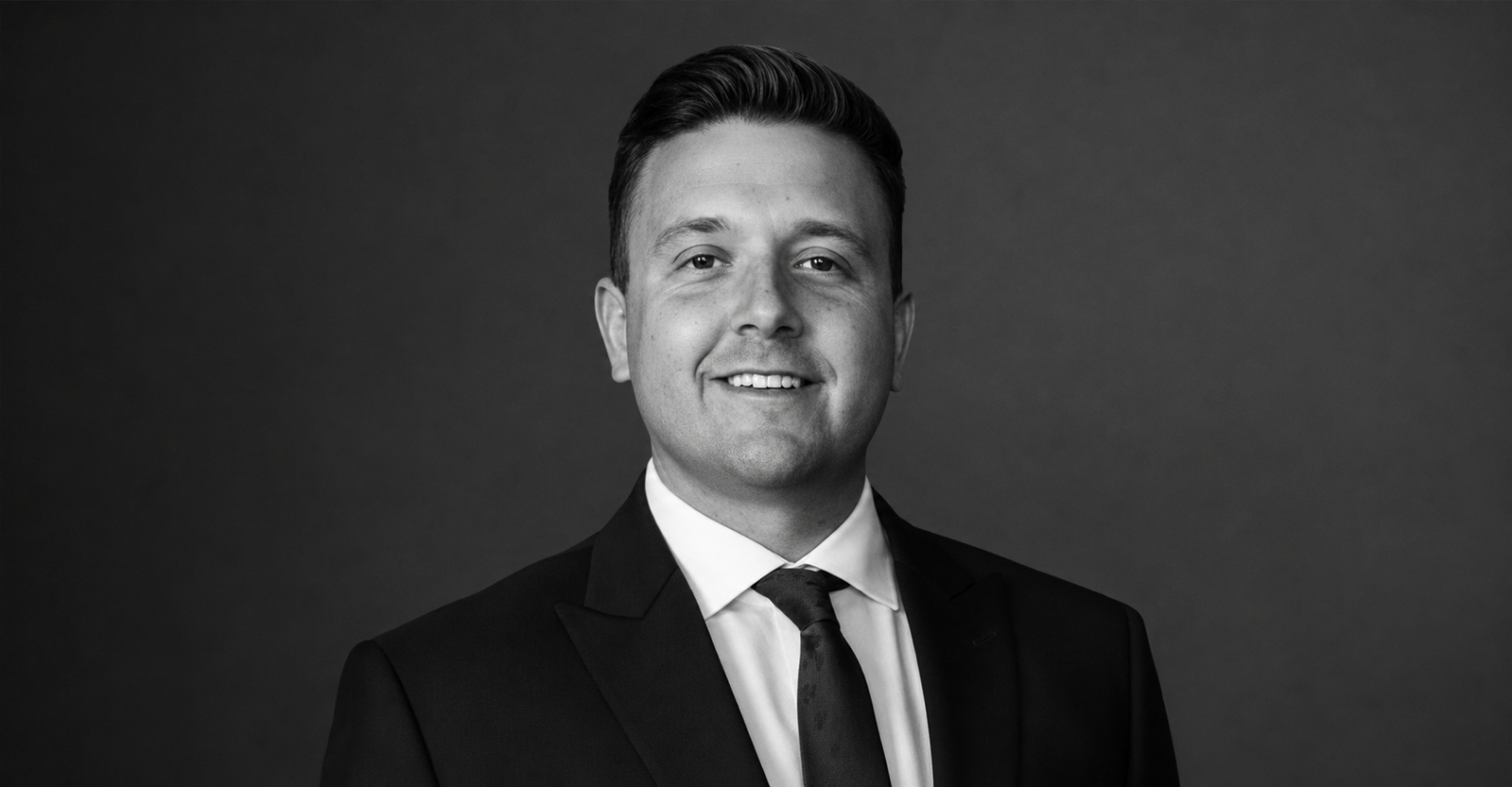
A Leadership Structure Built for Design and Delivery
LEOS’s leadership pairing is deliberate. Rui Liu’s background as a UK-qualified architect continues to shape the company’s design philosophy and project vision as Chairman; Jake’s role as CEO is to build and run the operational machinery capable of delivering that vision at scale — land acquisition, construction management, regulatory compliance, and the day-to-day discipline that separates a well-designed brochure from a building that actually gets handed over on schedule.
That division of responsibility reflects a structural problem Rui has spoken about directly: in much of the property industry, the people who design buildings and the people who decide what gets built are not the same people, and their incentives do not always align. At LEOS, Jake’s operational leadership exists specifically to make sure the company’s design ambitions survive contact with construction reality.
What the CEO Role Covers at LEOS
Bringing More Than a Decade of Experience
Jake brings more than a decade of experience across real estate development, operations, facilities management, customer experience and business leadership to the role — a background that informs his focus on operational discipline as the foundation for sustainable growth. That focus has shaped how LEOS approaches expansion: self-funded project structures, consistent contractor inspection standards across every site, and a deliberate refusal to grow the pipeline faster than the company’s delivery capacity allows.
Leading Into LEOS's Next Phase
Jake’s appointment comes at a pivotal moment for LEOS, following the October 2024 announcement of a $7 billion investment initiative targeting more than ten transformative developments across the region. Executing that pipeline responsibly — without compromising the construction and specification standards LEOS has built its reputation on — sits at the centre of Jake’s mandate as CEO.
As LEOS’s Dubai portfolio moves through active construction across Dubai Sports City, Dubailand, and Meydan District 11, Jake’s operational leadership is the mechanism by which the company intends to prove that ambition and delivery discipline are not in tension.
Jake Jacobs on LEOS' International Expansion
LEOS Developments’ expansion from a UK architectural practice into an international developer with an active pipeline across Dubai Sports City, Dubailand, and Meydan District 11 has been deliberate rather than opportunistic — a distinction CEO Jake Jacobs considers central to how the company approaches growth.
Building Outward From a UK Foundation
LEOS’s international expansion began from its UK base — offices in Weybridge, Surrey, and London — before extending into the UAE market. That sequencing matters to Jake’s approach: rather than treating international growth as a separate strategy for each new market, LEOS has applied the same operational and design standards developed in the UK to every subsequent market it has entered.
That consistency shows up directly in the company’s Dubai portfolio. The 3.2-metre ceiling heights standard across LEOS’s UAE developments, the RERA-registered, escrow-protected structure of every off-plan launch, and the contractor inspection discipline applied on every site are not adaptations for the Dubai market specifically — they are the same standards LEOS built its UK reputation on, extended internationally.
The $7 Billion Pipeline
In October 2024, Rui Liu announced a $7 billion investment initiative targeting more than ten transformative developments across the region — a pipeline Jake’s operational leadership is responsible for executing, a mandate that carried through his appointment as CEO in January 2026. That execution currently spans three active Dubai communities: Hadley Heights 2 in Dubai Sports City, the Weybridge Gardens series across three editions in Dubailand, and Knightsbridge’s two phases in Meydan District 11.
Jake has been direct about the discipline required to execute a pipeline of that scale responsibly: projects are self-funded rather than dependent on external financing that could compromise delivery timelines, and every site — regardless of scale or price point — operates under the same contractor inspection standard.
Why Expansion Discipline Matters More Than Expansion Speed
Jake’s approach to international growth is shaped by a specific concern: that developers who expand faster than their operational capacity allows put buyer trust at risk. Dubai’s off-plan market in particular has a reputation problem that several developers have contributed to — projects sold on ambitious renders that outran what was eventually delivered.
For LEOS, expanding into that market carried a specific strategic logic. Rather than treating the market’s reputation gap as a risk, Jake has framed it as the clearest opportunity available to differentiate — every construction update LEOS publishes and every project delivered as designed widens the distance between LEOS and the standard some of the market has set.
What Comes Next
As LEOS’s Dubai portfolio moves through active construction — with completions scheduled between Q3 2026 and Q2 2028 across its current projects — Jake’s focus remains on ensuring the company’s international expansion continues at a pace matched by its delivery capacity, rather than by market opportunity alone.
That discipline, more than the headline figures behind LEOS’s growth, is what Jake has identified as the real determinant of whether the company’s international expansion succeeds over the long term.
Jake Jacobs' Approach to Land Acquisition and Development
Land acquisition is where every property development either sets itself up to succeed or is quietly compromised before a single drawing is finalised. For Jake Jacobs, CEO of LEOS Developments, that first decision carries as much weight as any specification choice made later in the process.
Evaluating Location Fundamentals, Not Just Price
From Acquisition to Feasibility
Once a site clears Jake’s location criteria, the next stage of his process is feasibility — testing whether the site can support the design ambition LEOS intends to build on it, rather than working backward from a generic product template. This is where LEOS’s dual leadership structure matters operationally: Rui Liu’s architectural vision for a site and Jake’s assessment of its commercial and construction feasibility are tested against each other before a project moves forward, rather than sequentially.
That process is why LEOS’s three active Dubai developments look nothing alike architecturally — Hadley Heights 2’s aerodynamic tower form, Weybridge Gardens’ petal-inspired organic balconies, and Knightsbridge’s low-rise waterfront villas — despite sharing an identical underlying construction and compliance standard.
Managing Development Through Construction
Once a project moves into construction, Jake’s oversight extends to contractor quality control across every site — a consistent inspection discipline applied to every formwork, every steel bar, every MEP embed, regardless of the project’s scale or price point. That standard is paired with a deliberate financing approach: LEOS projects are self-funded rather than dependent on external financing structures that could compromise delivery timelines under pressure.
Regulatory compliance is treated as a foundational part of the development process rather than an administrative afterthought. Every LEOS project maintains RERA registration, DLD escrow protection, and Oqood registration from launch — a framework that protects both buyer capital and the construction discipline the company has built its reputation on.
A Repeatable Process, Applied at Scale
As LEOS executes the $7 billion investment initiative announced in October 2024, Jake’s land acquisition and development process is the mechanism by which that pipeline is meant to scale without compromising quality. The same criteria applied to selecting Dubai Sports City, Dubailand, and Meydan District 11 will apply to whichever markets and sites LEOS acquires next — a repeatable discipline rather than a one-off formula.
For Jake, that repeatability is the real test of a development process: whether it produces consistent results across ten projects, not just the first one.
Jake Jacobs on the Future of Dubai's Property Market
Dubai’s property market moved through a genuine inflection point in 2026 — a record first quarter followed by a more selective second quarter. For Jake Jacobs, CEO of LEOS Developments, that shift reflects a market maturing in exactly the direction the regulatory framework was designed to encourage.
Reading the 2026 Data
Dubai recorded its strongest first quarter on record in early 2026, with total transactions reaching AED 252 billion — a 31% year-on-year increase in value. The second quarter told a different story: transaction volumes eased 31% year-on-year, but that decline was concentrated almost entirely in the secondary market, down 59% year-on-year, while off-plan activity — the segment LEOS operates in — eased only 12% and grew to represent 76% of total market activity.
Jake’s operational reading of that data centres on what it signals about buyer behaviour: capital is increasingly concentrating around developers with genuine delivery track records, rather than spreading evenly across the market. New project launches fell more than 55% year-on-year by unit count in the same period — a supply pullback Jake views as developers pausing to let absorption catch up with an already substantial pipeline, rather than a signal of weakening confidence.
Off-Plan's Regulatory Maturity
A central part of Jake’s outlook rests on how far Dubai’s off-plan regulatory framework has matured. Mandatory escrow accounts, milestone-linked fund releases verified by independent engineers, and Oqood registration for every off-plan contract have transformed off-plan buying from a leap of faith into a structurally protected transaction — protection that applies equally to a first-time overseas buyer and an institutional fund.
That maturity, in Jake’s assessment, is precisely why off-plan has grown to represent the overwhelming majority of Dubai transactions even through a quarter of broader market cooling. Buyers are not simply chasing lower entry prices — they are placing increasing trust in a regulatory system that has proven itself capable of protecting their capital.
Where Jake Sees Opportunity Concentrated
Jake’s operational view of where growth is genuinely concentrated aligns closely with LEOS’s own portfolio positioning across Dubai Sports City, Dubailand, and Meydan District 11 — communities combining accessible entry pricing with confirmed infrastructure investment. Meydan District 11 stands out specifically for its low-density planning discipline, a structural constraint on future supply that Jake has pointed to as a genuine differentiator against communities where oversupply risk remains a live concern.
The February 2026 Golden Visa rule change — removing the requirement to have paid 50% of a property’s value before applying — is another development Jake has highlighted as materially widening Dubai’s investor base, with the property route now accessible to the majority of off-plan and mortgaged buyers for the first time.
What the Market Will Reward Next
Asked what will define success in Dubai’s property market through the remainder of 2026, Jake’s answer centres on operational discipline rather than market timing: developers with self-funded balance sheets, consistent construction quality control, and full regulatory compliance are best positioned to convert a more selective market into a competitive advantage, while developers relying on sales velocity alone will find that advantage increasingly difficult to sustain.
That is the environment Jake has spent his tenure at LEOS building the company to operate in — one where delivery discipline, not launch pricing alone, determines which developments earn buyer trust.
Jake Jacobs Recognised Among Leading Property Executives
The Power 100 Property Leaders 2026
The Power 100 is Property News International’s annual list recognising the region’s most impactful developers, contractors, consultants, designers and innovation pioneers — leaders redefining the built environment through scale, creativity and transformative projects. Jake’s inclusion on the 2026 list reflects more than a decade of experience across real estate development, operations, facilities management, customer experience and business leadership.
Operational Recognition, Not Just Design Recognition
Where LEOS’s design recognition tends to centre on Founder and Chairman Rui Liu’s architectural credentials, Jake’s recognition within the industry is more directly tied to execution — the operational discipline that allows LEOS’s design ambitions to survive the construction process intact. That distinction matters in a market where the gap between a well-designed launch and a well-delivered handover is where many developers fall short.
A Track Record Built on Regulatory Discipline
Part of Jake’s professional standing within the industry rests on LEOS’s consistent regulatory compliance record — every active project maintaining RERA registration, DLD escrow protection, and Oqood registration from launch, without exception. In a Dubai market where off-plan buyer trust has become increasingly dependent on regulatory transparency, that consistency has become a meaningful differentiator, and one directly attributable to Jake’s operational leadership.
Executing an Ambitious Pipeline Without Compromise
Jake’s leadership through the execution of the $7 billion investment initiative announced in October 2024 — spanning more than ten transformative developments across the region — represents the clearest current test of his operational standing, a mandate he has carried forward since being appointed CEO in January 2026. Delivering that scale of pipeline while maintaining self-funded project structures and consistent contractor inspection standards across every site is the specific challenge his role as CEO is built around.
That execution is currently visible across LEOS’s active Dubai portfolio: Hadley Heights 2 in Dubai Sports City, the Weybridge Gardens series in Dubailand, and Knightsbridge in Meydan District 11, each progressing through construction under the same operational standard regardless of project scale or price point.
What Recognition Means at the Operational Level
For Jake, the most meaningful form of professional recognition is the one least visible from outside the company: a construction schedule maintained, a regulatory filing completed without incident, a contractor inspection passed without compromise. Those operational details rarely make headlines, but they are, in his assessment, the actual foundation on which any developer’s broader industry recognition is eventually built — including recognitions like the Power 100 listing itself
Jake Jacobs on Operational Excellence at LEOS
Design ambition is only as good as the operational discipline behind it. For Jake Jacobs, CEO of LEOS Developments, that principle defines his entire approach to running the company — and it is the specific area where his leadership complements Founder and Chairman Rui Liu’s architectural vision.
Consistent Inspection Discipline Across Every Site
At the centre of Jake’s operational philosophy is a single standard applied without exception: every LEOS construction site — regardless of project scale or price point — operates under the same contractor inspection discipline. Every formwork, every steel bar, every MEP embed is checked and rechecked before being signed off. That standard applies equally to a AED 550,000 studio at Weybridge Gardens 3 and a AED 21.6 million signature villa at Knightsbridge.
Jake has described that consistency as non-negotiable specifically because it is the mechanism by which LEOS prevents its design ambitions from being quietly compromised during construction — the point in most developments where the gap between what was promised and what gets delivered actually opens up.
Regulatory Compliance as Operational Foundation
Under Jake’s leadership, regulatory compliance is treated as core operational infrastructure rather than an administrative formality. Every LEOS off-plan project maintains full RERA registration, DLD-regulated escrow protection, and Oqood registration from launch — a framework that protects buyer capital through Dubai’s milestone-linked construction funding system, while simultaneously giving LEOS’s own construction schedule a transparent, independently verified benchmark to be measured against.
That framework is applied identically across LEOS’s active Dubai portfolio — Hadley Heights 2 in Dubai Sports City, the Weybridge Gardens series in Dubailand, and Knightsbridge in Meydan District 11 — regardless of each project’s individual timeline or scale.
Self-Funded Growth as a Quality Control Mechanism
Jake has been explicit that LEOS’s self-funded project structure is not simply a financing preference — it is a quality-control mechanism in its own right. Projects dependent on external financing can face pressure to accelerate construction schedules or compromise specification decisions under funding constraints. By structuring projects to be self-funded, Jake’s operational approach removes that pressure point, allowing construction quality decisions to be made on their own merits rather than under financial strain.
That discipline directly shapes how Jake has approached executing the $7 billion investment initiative announced in October 2024: growth that outpaces the company’s demonstrated capacity for quality control is treated internally as a risk to be actively managed against, not an opportunity to be pursued regardless of cost.
Operational Excellence as a Buyer-Facing Promise
For Jake, operational excellence ultimately translates into a specific promise to buyers: that a unit purchased from renders and a specification document will match, at handover, exactly what was shown at launch. Every element of his operational approach — consistent inspection standards, full regulatory compliance, self-funded project structures — exists to make that promise reliably true across every LEOS project, not just the flagship ones.
As LEOS’s current portfolio moves through construction toward completions scheduled between Q3 2026 and Q2 2028, that operational discipline — more than any single design feature — is what Jake Jacobs has identified as the real determinant of whether the company’s growth translates into lasting buyer trust.